

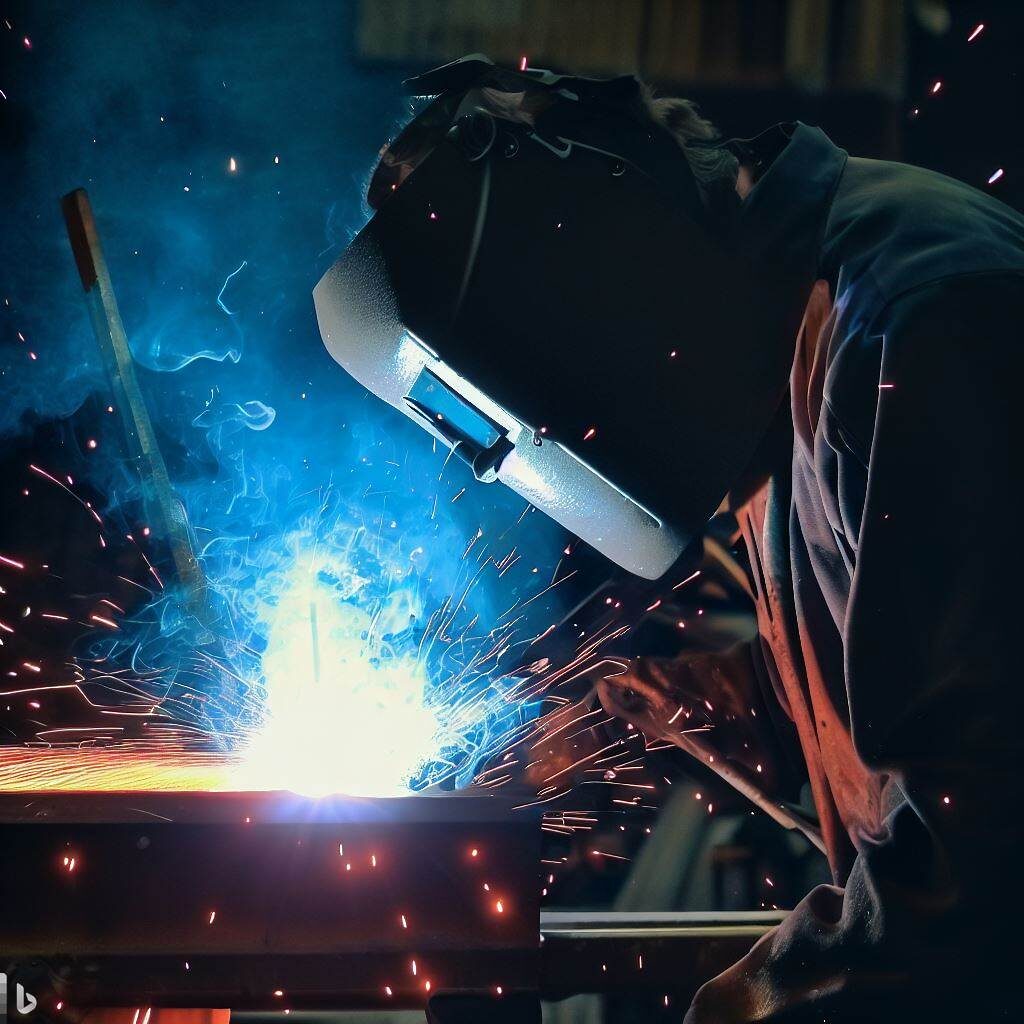
Fiber Laser Cutting Services
Fiber laser cutting is one of the most widely used manufacturing processes in modern sheet metal fabrication. OEMs, industrial equipment manufacturers, automation companies, transportation suppliers, and contract manufacturers depend on fiber laser technology to produce accurate parts with consistent quality and fast turnaround times.
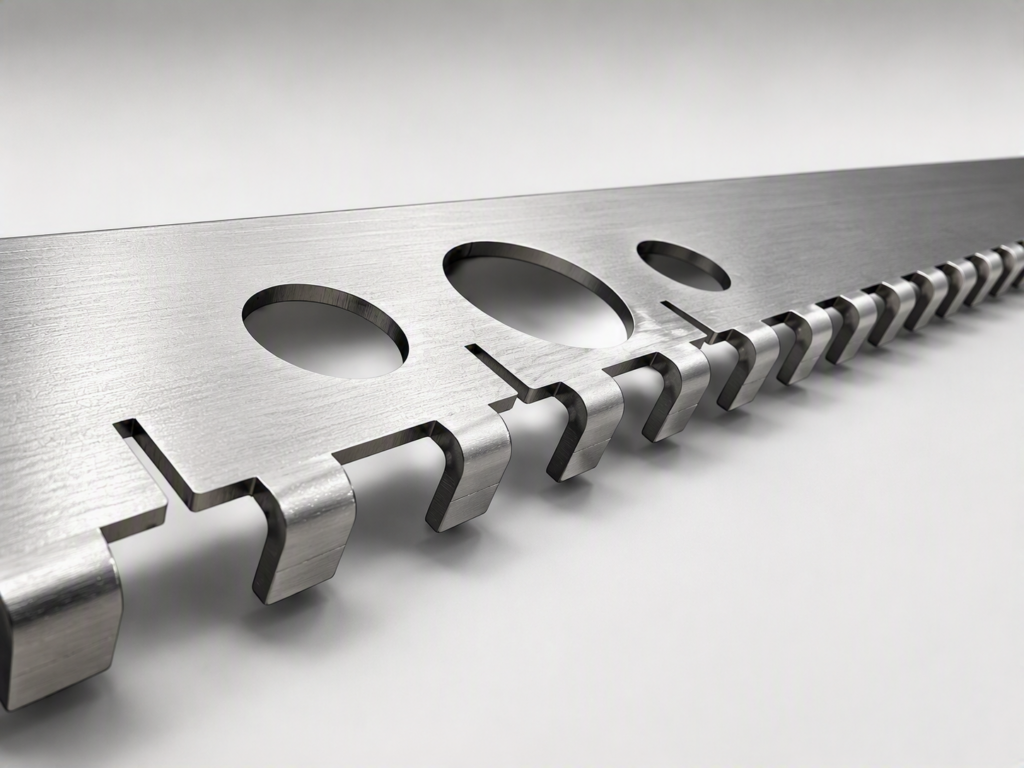
Unlike traditional cutting methods that often require dedicated tooling, fiber laser cutting offers exceptional flexibility for both prototype development and production manufacturing. Engineers can create complex geometries, intricate profiles, and tight-feature details without investing in custom tooling. As a result, buyers benefit from shorter lead times, lower upfront costs, and greater supply chain responsiveness.
METCO Metal Fab uses Amada ENSIS fiber laser technology to manufacture precision-cut components for customers throughout Chattanooga, Tennessee, Georgia, Alabama, and the broader United States. Our laser cutting operation supports everything from first-article prototypes to recurring production programs and complete fabricated assemblies. The largest part we can cut in-house is 78″ x 156″ and up to 1-1/8″ thickness in mild steel.
Email your drawings to sales@metcometalfab.com for a quote.
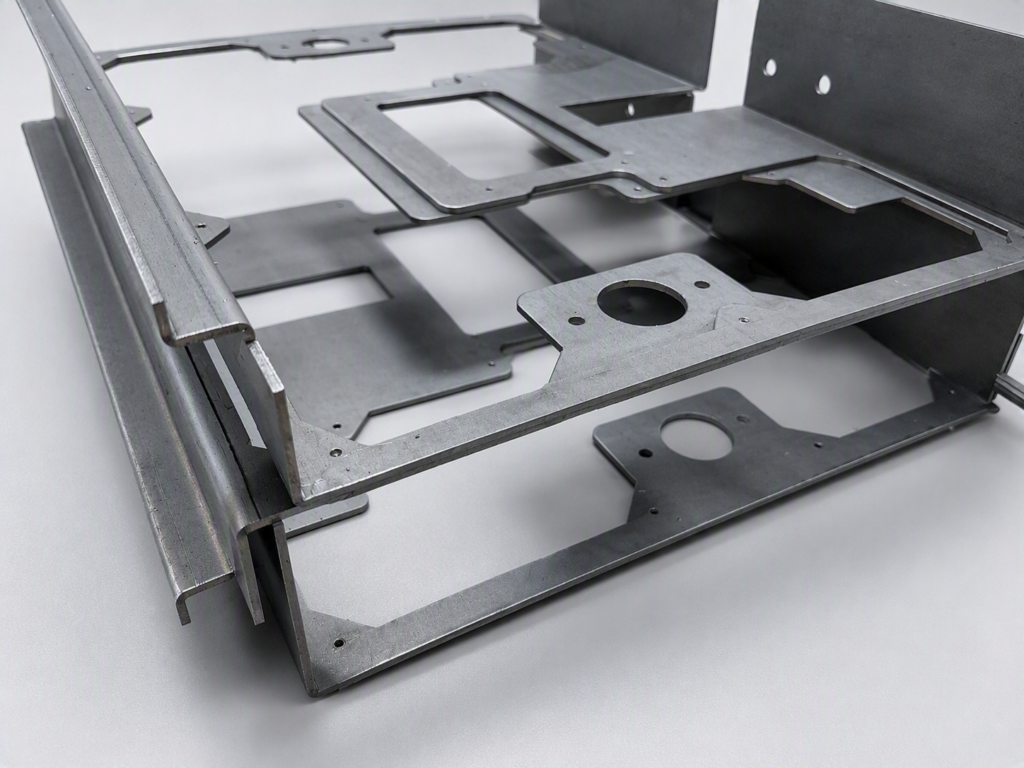
Customers rely on fiber laser cutting for welded assemblies, machine brackets, enclosure panels, structural components, electrical cabinet parts, and OEM production hardware. The process combines high precision with the scalability needed to support both low-volume and high-volume manufacturing.
Amada ENSIS Fiber Laser Technology
METCO Metal Fab uses Amada ENSIS fiber laser technology to deliver accurate, repeatable laser-cut components across a broad range of materials and thicknesses. This advanced platform helps support prototype development, low-volume production, and high-volume manufacturing without sacrificing cut quality or efficiency.
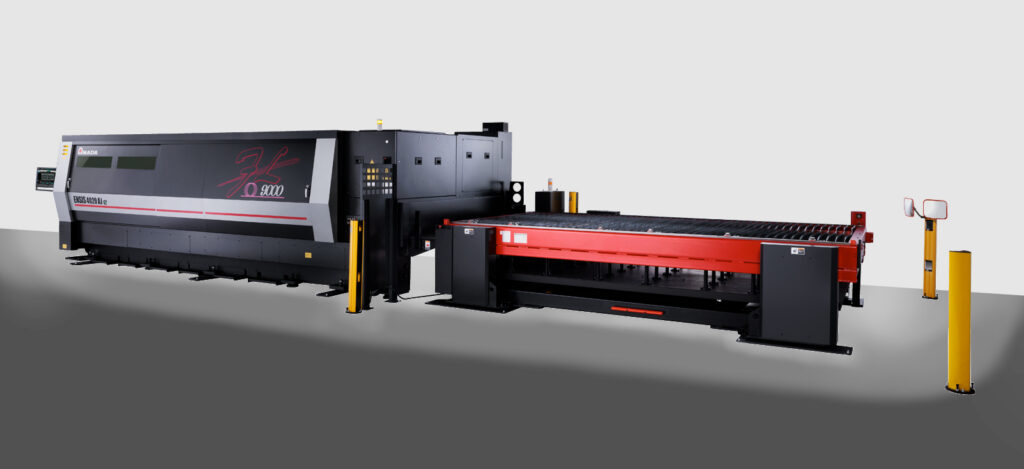
The ENSIS system combines fiber laser performance with adaptive beam control. Rather than operating within a narrow processing range, the system automatically adjusts the laser beam to suit different material types and thicknesses. This capability improves cut quality, processing speed, and consistency across a wide variety of applications.
| Material | Maximum Thickness |
| Mild Steel | Up to 1.125″ |
| Stainless Steel 304 & 316 | Up to 0.750″ |
| Aluminum 3003, 5052, 6061 | Up to 0.625″ |
| Galvanized Steel | Up to 7GA |
Galvannealed Steel | Up to 7GA |
| Copper | Up to 1/2″ |
Brass | Up to 1/2″ |
The ability to process multiple materials on a single platform gives engineers greater design flexibility and helps buyers consolidate fabrication requirements with a single manufacturing partner. Customers can source simple brackets, complex sheet metal components, precision enclosure panels, and production assemblies using the same proven cutting technology.
By combining advanced automation, process stability, and high cutting accuracy, the Amada ENSIS platform helps reduce variation while supporting consistent production results. This combination of flexibility and performance makes fiber laser cutting an effective solution for modern OEM manufacturing, industrial equipment production, automation systems, transportation components, and fabricated assemblies.
Email your drawings to sales@metcometalfab.com for a quote.
Why Fiber Laser Cutting Has Become the Industry Standard
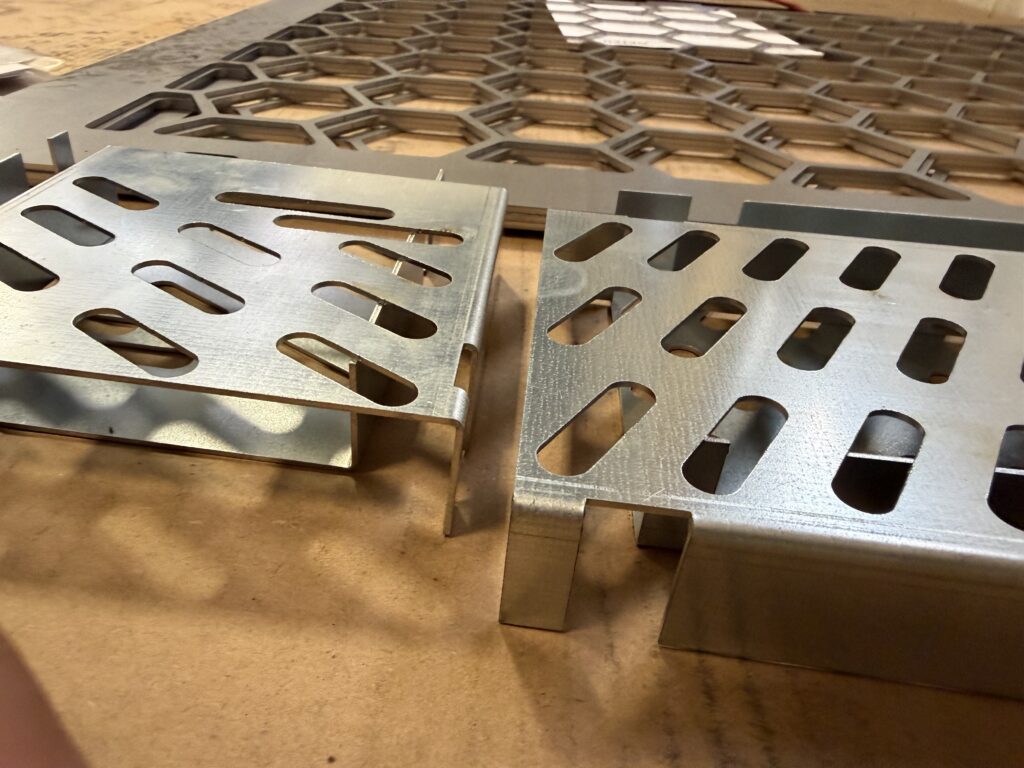
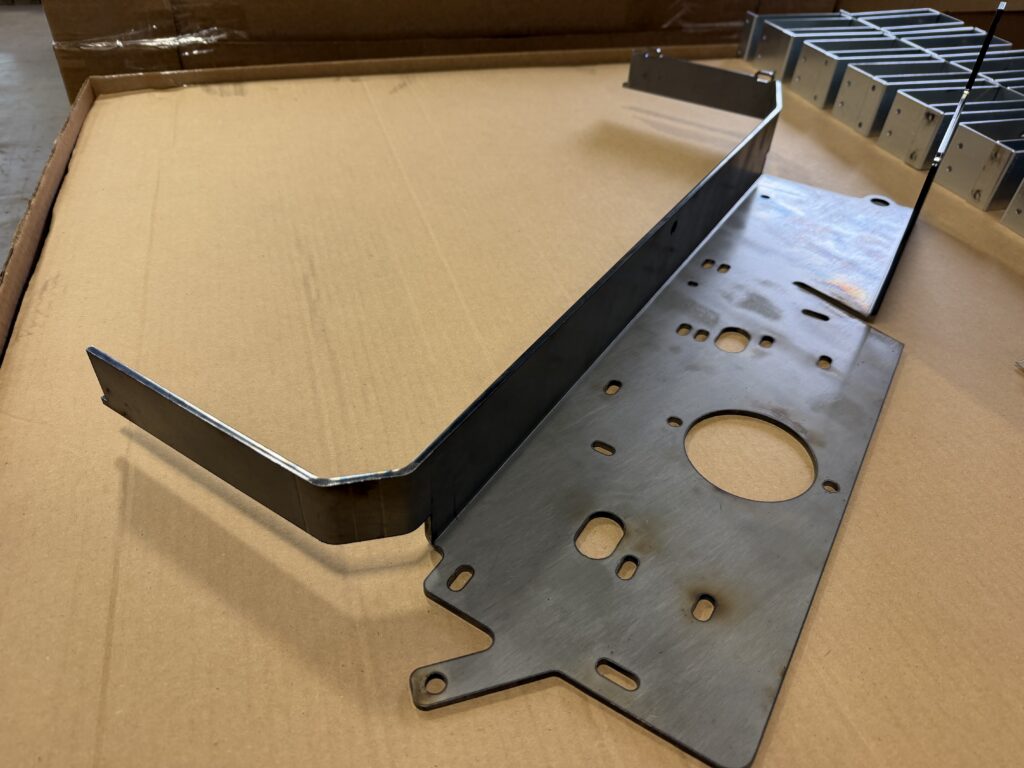
Manufacturers across many industries have adopted fiber laser cutting because it combines precision, speed, flexibility, and cost efficiency in a single process. The technology supports both prototype development and full-scale production while maintaining consistent quality from the first part to the last.
Key benefits include:
- High dimensional accuracy
- Excellent repeatability
- Fast processing speeds
- Minimal burr formation
- Small heat-affected zones
- Reduced distortion
- High material utilization
- No custom tooling requirements
- Rapid implementation of engineering changes
These advantages give engineers greater freedom during product development. Complex geometries, intricate cutouts, and detailed features can often be produced without additional tooling or secondary operations.
Manufacturing buyers benefit as well. Fiber laser cutting helps reduce risk by improving consistency and minimizing process variation. Faster production speeds support shorter lead times, while digital programming allows design revisions to move into production quickly.
The same equipment can efficiently support prototype quantities, low-volume runs, and recurring production orders. This flexibility helps sourcing professionals simplify supplier management and respond more effectively to changing customer demand.
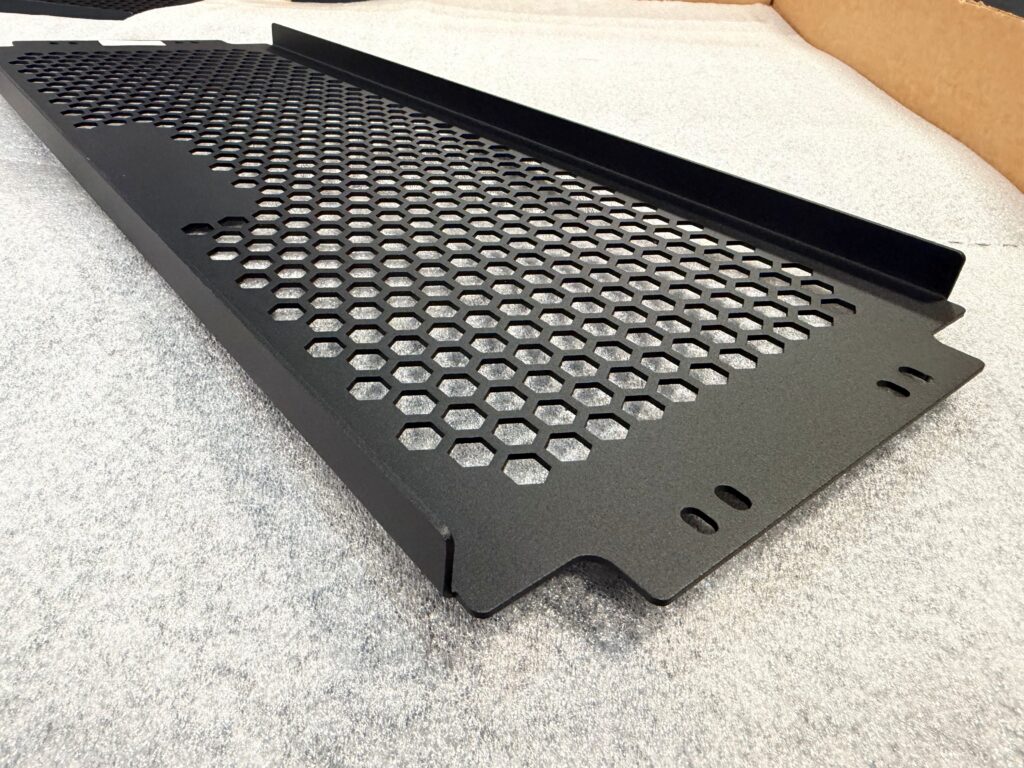
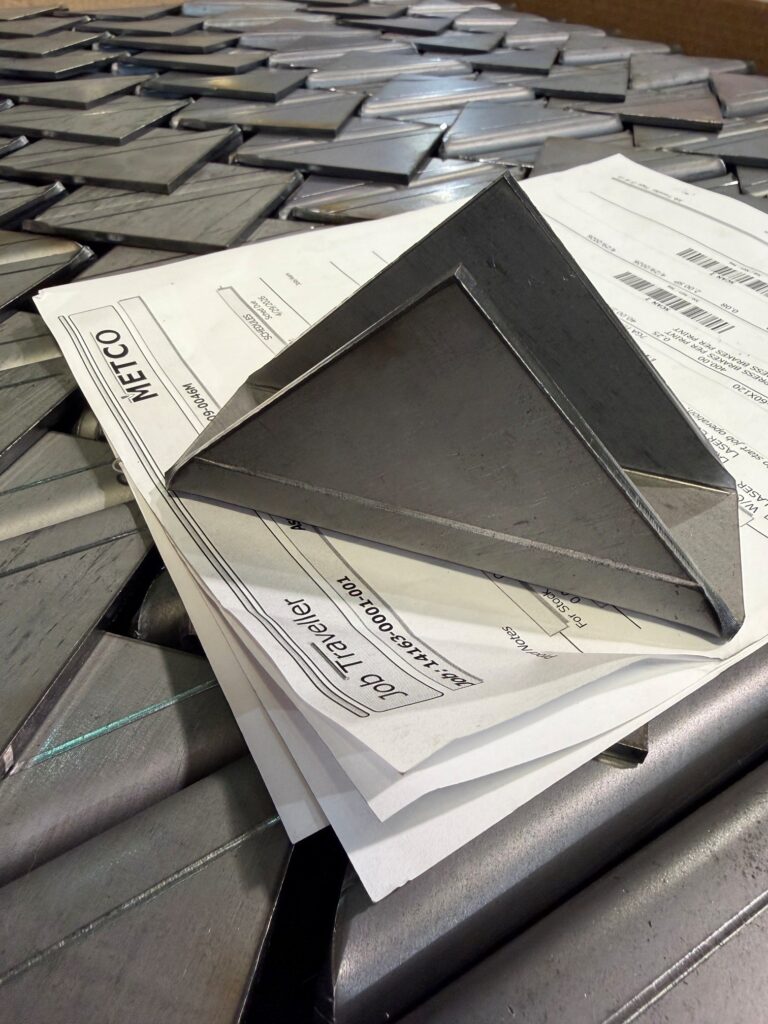
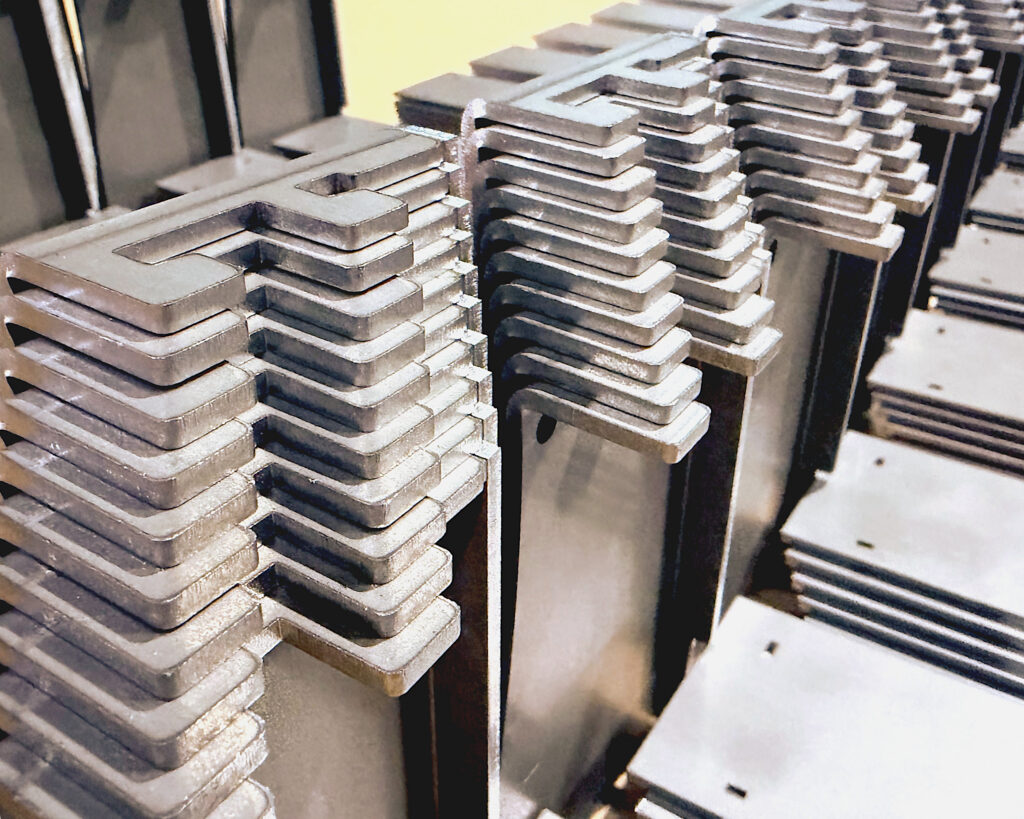
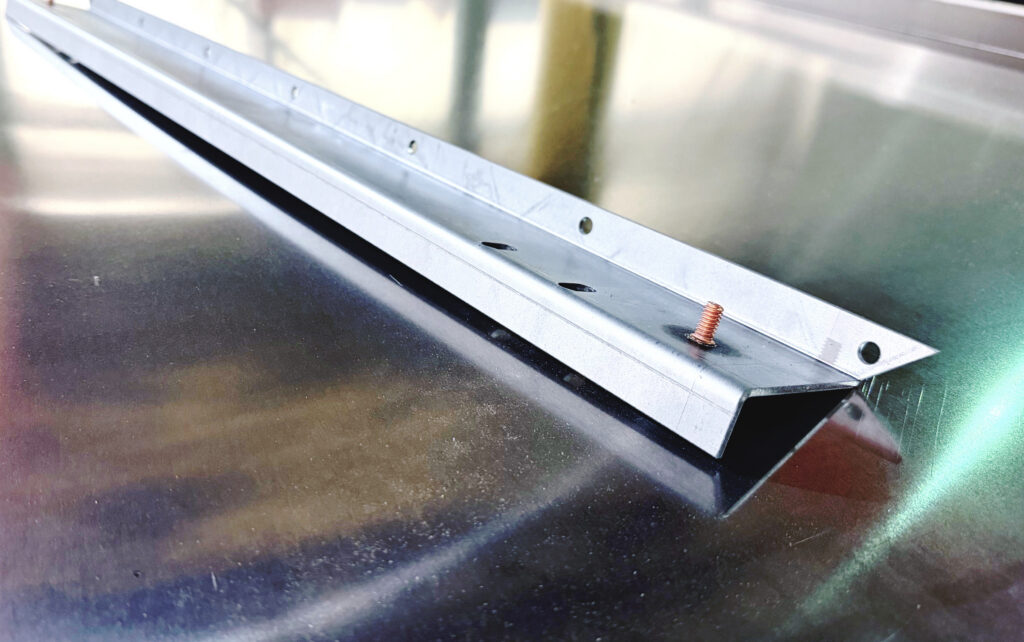
Fiber laser cutting also supports downstream manufacturing operations. Accurate cut parts typically move through forming, welding, machining, hardware insertion, powder coating, and assembly processes with fewer fit-up issues. Better dimensional consistency often translates into lower assembly costs and improved finished-product quality.
As manufacturers continue to focus on quality, responsiveness, and operational efficiency, fiber laser cutting remains one of the most effective technologies available for modern sheet metal fabrication
Learn more about Fiber Laser Cutting:
Fiber Laser Cutting Tolerances →
Laser Cutting Design Guidelines →
Preparing RFQs for Laser Cutting →
The Amada ENSIS Advantage
Not all laser systems perform equally.
METCO utilizes Amada ENSIS technology because it delivers exceptional performance across a wide range of materials and thicknesses.
However, traditional laser systems often perform best within a relatively narrow operating range. In contrast, ENSIS technology uses Variable Beam Control, continuously adjusting beam characteristics to optimize cutting performance based on material and thickness.
Benefits of ENSIS Technology
| Feature | Benefit |
|---|---|
| Variable Beam Control | Optimized cutting across multiple thicknesses |
| Fiber Laser Platform | Greater speed and efficiency |
| Advanced Motion Control | Repeatable accuracy |
| Large Sheet Capacity | Improved nesting and material utilization |
| Automated Process Control | Consistent production quality |
As a result, this flexibility allows manufacturers to process thin-gauge sheet metal and heavier plate materials while maintaining excellent cut quality and dimensional consistency.
That is why, for OEM customers, this translates into fewer manufacturing limitations and greater confidence when transitioning products from prototype to production.
Materials Commonly Used in Fiber Laser Cutting
Material selection often has a greater impact on manufacturing success than the cutting process itself.
Therefore, choosing the correct alloy influences:
- Cost
- Corrosion resistance
- Formability
- Weldability
- Weight
- Finish requirements
- Long-term performance
Carbon Steel
Carbon steel remains the most common laser-cut material. For example, common grades include A36, A1011, and A1018. HRPO stands for Hot Rolled Pickled & Oil, which is a preferred surface condition for most laser cutting systems. In addition, carbon steel offers low cost and excellent forming characteristics.
Additional grades commonly used in the metal fabrication industry:
- Structural components are made of ASTM Grades A572 Gr.50, A516 Gr.70, and A656 Gr.80
- Equipment frames often contain beams, Channels, and Angles with the ASTM Grades A992/A572, A514, and Tubing A500 Gr.B/C, A513 DOM 1026
- Weldments
- Brackets
- Industrial machinery like hoppers, chutes etc contain abrasion resistant ASTM Grades like AR235, AR400, AR500 or Impact resistant ASTM Grade A514
Advantages of carbon steel are its low cost yet excellent welding, machining, and forming characteristics.
Stainless Steel
Stainless steel is frequently selected when corrosion resistance is required. Most commonly, manufacturers specify grades 304, 316, and 409. For this reason, stainless steel appears in food processing equipment, outdoor products, and washdown environments. In addition, Stainless comes in polished #3 or #4 which are two different grains of sandpaper brushing used in appliances and architecture. Lastly, Actual Mirror polish is available as #8.
Advantages of stainless steel are excellent corrosion resistance, easy maintenance and attractive appearance, and not the least its long service life.
Aluminum
Aluminum provides significant weight reduction compared to steel while maintaining excellent strength characteristics.
| Alloy | Typical Application |
| 5052-H32 | Formed components |
| 3003-H14 | General fabrication |
| 6061-T6 | Structural applications |
5052 is generally preferred for formed sheet metal parts due to its superior forming ability and reduced cracking risk.
Due to reduced cracking, common 5052 Alum applications include:
- Electronics enclosures
- Transportation equipment
- Lightweight assemblies
- Aerospace support hardware
Galvanized and Galvannealed Steel
These surface coated materials offer improved corrosion resistance compared to bare carbon steel.
Typical applications include:
- Electrical enclosures
- HVAC equipment
- Outdoor industrial products
- Powder-coated assemblies
What’s more, galvannealed steel is often preferred for painted products due to superior paint adhesion and improved weldability.
Typical Fiber Laser Cutting Tolerances
One of the most frequent questions engineers ask is:
“What laser cutting tolerances can you hold?”
The answer depends on material type, thickness, geometry, and inspection requirements.
Typical Mild Steel Laser Cutting Tolerances:
| Material Thickness | Typical Tolerance |
| Up to .060″ | ±0.00″ to ±0.008″ |
| .060″ to .125″ | ±0.008″ |
| .125″ to .250″ | ±0.008″ to ±0.010″ |
| .250″ to .500″ | ±0.010″ to ±0.012″ |
| Above .500″ | ±0.015″ to ±0.020″ |
Engineering Design Guidelines for Laser-Cut Parts
The most successful projects begin long before the first sheet reaches the laser.
Nevertheless, designing parts with manufacturing in mind improves quality, reduces cost, and shortens lead times.
Minimum Hole Size Rule
A widely accepted design guideline is Minimum Hole Diameter ≥ Material Thickness
Examples Minimum Hole Diameter ≥ Material Thickness
| Material Thickness | Recommended Smallest Hole Diameter |
| .060″ | .060″ |
| .125″ | .125″ |
| .250″ | .250″ |
| .500″ | .550″ |
| .750″ | .790″ |
Following this guideline generally improves:
- Hole roundness
- Edge quality
- Process stability
- Dimensional consistency
- Production speed
Also, when extremely small holes are required, secondary machining operations like drilling, helical milling, reaming, or honing provide more accurate results.
Hole-to-Edge Distance Rule
Features positioned too close to an edge can create distortion and dimensional instability.
Recommended Guideline Feature-to-Edge Distance ≥ Material Thickness
Whereas, observing this rule, helps maintain part strength and improves overall dimensional consistency.
Bend Line Considerations
Many laser-cut parts ultimately move to press brake forming operations. Consequently, features located too close to bend lines can experience:
- Distortion
- Elongation
- Cracking
- Assembly problems
A practical starting point is: Holes should generally be located 2-3 times material thickness from bend lines. Furthermore, early manufacturability reviews often identify these issues before production begins
Internal Corner Radii
Sharp internal corners increase manufacturing difficulty and cost. Whenever functional requirements allow, engineers should incorporate internal radii. Hence, stress fractures are reduced and the manufacturers have more option to produce the part.
The recommended internal corner radius should be >= 2x the laser kerf. Typically 0.010″ to 0.016″ Radius
Specifically, the following benefits are achievable :
- Faster processing
- Lower stress concentration
- Better dimensional consistency
- Improved forming performance
Heat-Affected Zones and Dimensional Stability
Traditional thermal cutting processes create a heat-affected zone (HAZ). However, modern fiber lasers create significantly smaller HAZ regions than plasma or oxy-fuel processes.
| Process | HAZ Size | Distortion Risk | Edge Quality |
| Fiber Laser | Very Low | Very Low | Excellent |
| CO₂ Laser | Low | Low | Excellent |
| Plasma | Moderate | Moderate | Good |
| Oxy-Fuel | High | High | Fair |
| Waterjet | None | None | Excellent |
Accordingly, benefits of reduced thermal impact include:
- Better flatness
- Improved dimensional consistency
- Reduced residual stress
- Improved weld preparation
- Better forming performance
Too, these advantages are especially important for precision enclosures, machine components, structural brackets, and fabricated assemblies.
Fiber Laser vs Plasma vs Waterjet
Selecting the correct cutting process requires consideration of both the cutting operation and downstream manufacturing processes.
Process Comparison
| Characteristic | Fiber Laser | Plasma | Waterjet |
| Accuracy | Excellent | Good | Excellent |
| Small Features | Excellent | Good | Very Good |
| HAZ | Very Low | Moderate | None |
| Edge Quality | Excellent | Good | Moderate |
| Production Speed | Excellent | Excellent | Excellent |
| Thin-Gauge Sheet | Excellent | Fair | Good |
| Material Utilization | Excellent | Very Good | Very Good |
Fiber laser cutting is typically the preferred choice for precision sheet metal parts, enclosures, complex geometries, tight-tolerance components, formed assemblies, and production manufacturing projects. Its combination of accuracy, speed, and repeatability makes it ideal for a wide range of sheet metal fabrication applications.
In some situations, waterjet cutting may offer advantages. Manufacturers often choose waterjet cutting when working with heat-sensitive materials, extremely thick materials, or certain specialty alloys where eliminating heat-affected zones is important.
Plasma cutting may be a better option for heavy plate applications, structural fabrication projects, and cost-sensitive thick material cutting. Its ability to process thicker materials efficiently can make it a practical choice for specific fabrication requirements.
For most sheet metal fabrication applications, however, fiber laser technology provides the best overall balance of cut quality, production speed, precision, and manufacturing efficiency.
Inspection Methods and Quality Control
Inspection begins with a review of the customer drawing, GD&T requirements, and first article expectations. Throughout production, quality personnel verify dimensions, bend angles, hole locations, and critical features to ensure compliance with customer requirements.
METCO uses digital calipers, height gauges, angle finders, radius gauges, precision protractors, and inspection fixtures when a project requires additional verification.
Likewise, quality assurance extends beyond measurement. Material verification, tooling verification, program validation, first article inspection, and in-process inspection help maintain process control throughout production. Rather than relying on final inspection alone, the objective is to build quality into every stage of manufacturing.
First Article Inspection (FAI)
Many OEM programs require first article approval before full production begins. This process verifies that manufacturing methods, materials, and dimensions meet the requirements shown on the drawing. A typical first article inspection may include:
- Dimensional verification
- Material verification
- Hole location validation
- Visual inspection
- Assembly validation
- Documentation may include:
- Ballooned drawings
- Inspection reports
- Material certifications
- Process certifications
First article inspections establish the production baseline. Teams validate dimensions, materials, and critical features prior to release. Manufacturers gain confidence that future production will match approved results.
Certifications and Compliance
Manufacturers often evaluate more than equipment, capacity, and price when selecting a fabrication partner. Quality systems, documentation practices, and compliance requirements play a major role in supplier qualification and long-term program success.
Many OEMs require suppliers to demonstrate consistent manufacturing processes, controlled documentation, and traceable production records. Effective compliance programs help reduce risk while supporting quality, delivery, and customer expectations.
Quality Management Systems
A structured quality management system establishes standardized procedures for manufacturing, inspection, corrective action, document control, and continuous improvement.
Key objectives typically include:
- Process consistency
- Documented work instructions
- Inspection verification
- Corrective action management
- Supplier quality control
- Continuous improvement
Well-defined procedures help reduce variation across departments and production runs. Standardization supports repeatable results regardless of order quantity or product complexity.
Material Traceability
Many applications require verification of material grade and specification prior to manufacturing. Material traceability helps ensure components are produced from the correct alloy and meet customer-defined requirements.
Documentation may include:
- Mill test reports
- Material certifications
- Purchase records
- Lot traceability records
- Customer-specific documentation
Traceability requirements often increase when components support critical industrial, transportation, energy, or infrastructure applications.
Customer Documentation Requirements
Different industries require different levels of documentation. Some projects require basic inspection records, while others require extensive production documentation.
Common customer requirements include:
- First article inspection reports
- Ballooned drawings
- Material certifications
- Dimensional inspection reports
- Process certifications
- Customer-specific quality records
Documentation requirements are typically reviewed during the quotation process so production plans align with customer expectations.
Regulatory and Industry Standards
Manufacturing standards vary by industry, product type, and end-use application. Drawings, specifications, and customer requirements often reference industry-recognized standards that govern dimensions, materials, finishes, welding, inspection, or performance criteria.
Engineering teams, sourcing professionals, and quality managers often evaluate suppliers based on their ability to understand and comply with these requirements. Strong communication during quoting and project review helps identify compliance needs before production begins.
Supporting Long-Term OEM Programs
OEM manufacturers frequently seek suppliers capable of supporting products for many years. Consistent compliance practices help maintain quality standards throughout product life cycles, engineering revisions, and changing production volumes.
Successful supplier relationships depend on:
- Consistent quality performance
- Accurate documentation
- Clear communication
- Reliable production processes
- Effective problem resolution
A disciplined approach to compliance helps customers reduce risk and maintain confidence throughout the manufacturing process. Quality systems, traceability practices, and documented procedures create a foundation for repeatable results and long-term manufacturing partnerships.
Prototype Development Through Production Manufacturing
Production Consistency
Maintaining consistency across production runs requires more than accurate equipment. Standardized processes, documented procedures, and effective communication all contribute to repeatable results.
- Engineering validation
- Design refinement
- Functional testing
- Assembly verification
- Repeatability
- Process control
- Documentation
- Cost optimization
- Supply chain reliability
These practices help reduce variation and improve predictability throughout production.
Supporting OEM Requirements
OEM manufacturers often require additional levels of traceability and documentation. Inspection requirements may vary by industry, application, and customer specification.
METCO works with customers to define inspection expectations during the quotation and production planning process. Establishing those requirements early helps prevent misunderstandings and ensures the correct level of verification accompanies each order.
Reliable inspection practices produce accurate parts, improve assembly fit, and strengthen confidence in finished products. When manufacturing teams detect potential issues early, they can resolve them quickly and maintain production schedules with minimal disruption.
RFQ Preparation Guide for Buyers and Sourcing Professionals
Often fabrication problems originate during the quotation process rather than in manufacturing. Complete RFQs help suppliers quote accurately and identify risks early.
Recommended RFQ Checklist
- PDF Drawing
STEP Model
DXF File
Material Specification
Material Thickness
Quantity Required
Revision Level
Finish Requirements
Assembly Requirements- Delivery Expectations
For instance, providing complete information reduces assumptions, improves quote accuracy, and helps avoid downstream manufacturing delays.
Industries Served
METCO supports OEMs and industrial manufacturers across a broad range of industries. Customers include manufacturers of material handling equipment, industrial machinery, automation systems, control consoles, electrical enclosures, construction equipment, agricultural equipment, and food processing equipment.
Furthermore, the company provides CNC press brake forming services for general industrial fabrication projects that require prototype development, replacement parts, or recurring production runs. From concept through manufacturing, customers receive support focused on manufacturability, quality, and production efficiency.
Many of these products move through multiple fabrication processes after laser cutting. Components may require forming, welding, PEM hardware installation, machining, powder coating, or final assembly before shipment. Maintaining dimensional accuracy during the cutting process helps improve quality throughout each downstream operation.
Our customers range from growing manufacturers to established OEMs that require a dependable fabrication partner. Whether the project involves a prototype enclosure, a production bracket, or a complex fabricated assembly, fiber laser cutting provides the precision and flexibility needed to support modern manufacturing requirements.
FAQs About Fiber Laser Cutting
What materials can METCO cut with its Fiber Laser Cutting Systems?
METCO’s Amada ENSIS-4020 AJe Fiber Laser Cutting Systems process a wide range of materials including carbon steel, stainless steel, and aluminum. Also, this system can cut galvanized steel, galvannealed steel, copper, bronze, and other types of metals. Material selection depends on part geometry, thickness requirements, and end-use application. Specifically, our team reviews each RFQ to recommend the most cost-effective manufacturing approach.
What material thicknesses can you laser cut?
Material thickness capabilities vary by material type and part geometry. Fiber Laser Cutting is ideal for thin-gauge sheet metal as well as heavier plate. For instance, applications are commonly industrial equipment, enclosures, brackets, structural components, and OEM assemblies. For example, METCO’s laser system in Chattanooga, TN can cut the following:
- Mild Steel up to 1.125″ thickness
- Stainless Steel 304 or 316 up to 3/4″ thickness
- Aluminum 3003, 5052, or 6061 up to 5/8″ thickness
Finally, when quoting a project, METCO evaluates material type, thickness, tolerances, and production volume to ensure the most efficient manufacturing method is used.
Is Fiber Laser Cutting suitable for precision manufacturing?
Yes. Fiber Laser Cutting provides excellent dimensional accuracy, repeatability, and edge quality for production parts. Likewise, modern Fiber Laser Technology allows manufacturers to produce intricate geometries, tight-feature details, and complex nested layouts. As a result, quality remains consistent throughout production runs.
- Mild Steel Fiber Laser Cutting tolerance +/-0.010″ 30GA thru 3/16″ thickness
- Mild Steel Fiber Laser Cutting tolerance +/-0.015″ 1/4″ thru 3/4″ thickness
- Mild Steel Fiber Laser Cutting tolerance +/-0.015″ 7/8″ thru 1-1/8″ thickness
Compared to traditional cutting, this makes Precision Fiber Laser Cutting an excellent choice for OEM components, industrial equipment parts, and precision sheet metal fabrication.
Can METCO support prototype and production quantities?
Absolutely.
First, METCO supports everything from Prototype/First Article to ongoing high-volume production manufacturing. Besides, whether you need a small quantity for design validation or recurring production volumes, our fabrication team can develop a manufacturing plan that supports your requirements.
Many customers begin with prototype laser-cut parts and later transition into repeat production programs.
What file formats do you accept for laser cutting RFQs?
METCO works with SOLIDWORKS, AutoCAD, Inventor, DXF, DWG, and STEP file formats. However, our engineering and estimating teams commonly work with:
- STEP (.stp, .step)
- .SLDPRT or .SLDRW from SolidWorks® software
- .DXF files like AutoCAD® software
- .DWG files like DraftSight® software
- .PDF drawings
- File share links to trusted download servers such as SharePoint®, Google Drive®, etc.
- Material and specification documents
For example, providing 3D CAD models and detailed drawings helps accelerate quoting and manufacturability review. All product names, trademarks, registered trademarks, logos, and brands are the property of their respective owners. Any use of trade names or trademarks is for identification and reference purposes only and does not imply any affiliation with or endorsement by METCO Metal Fab.
Can METCO review parts for manufacturability before production?
That and much more.
One of the most valuable stages in the quoting process is identifying potential manufacturing challenges before production begins. And, our team reviews drawings, tolerances, material selections, bend requirements, and fabrication workflows to help avoid unnecessary costs, delays, and redesigns.
Too, early collaboration often improves lead times while reducing total project cost.
What industries does METCO serve?
METCO manufactures components and assemblies for a variety of industries, including:
- Industrial Equipment
- Material Handling
- Automation Systems
- Transportation Equipment
- Energy
- Infrastructure
- OEM Manufacturing
- Commercial Equipment
In particular, our customers range from growing manufacturers to established OEMs that require dependable fabrication partners.
How quickly can I receive a quote?
Quote turnaround depends on project complexity, drawing completeness, and material requirements. For example, providing complete drawings, CAD files, material specifications, and estimated annual volumes allows our team to review projects and respond efficiently in 1-3 business days.
Additionally, the more information provided with an RFQ, the faster we can evaluate manufacturability and pricing.
Why choose METCO for Fiber Laser Cutting Services?
METCO combines advanced Amada Fiber Laser Technology with practical manufacturing experience. Furthermore, we focus on producing accurate, repeatable parts while helping customers identify fabrication risks early in the process. Customers are our primary focus and we pride ourselves in providing accurate, timely, and transparent communication.
Because of this, engineers encounter fewer surprises during production and keep their projects moving.
Meanwhile, buyers can enjoy the fruits of consistent quality, dependable communication, and a manufacturing partner focused on long-term success. In addition, we also are operationally flexible should you encounter a run on products.
Request a Fiber Laser Cutting Quote
Whether you need prototype components, production sheet metal parts, or complete fabricated assemblies, METCO Metal Fab can help. Moreover, our Amada ENSIS Fiber Laser Cutting Systems deliver the precision, repeatability, and production capacity required by OEMs and manufacturers throughout the United States.
Send your drawings, CAD files, or project requirements today to Request a Quote for:
- Fiber Laser Cutting Services
- Laser Cutting Quote
- Prototype Sheet Metal Parts
- Production Manufacturing
- OEM manufacturing
- Fabricated Assemblies