


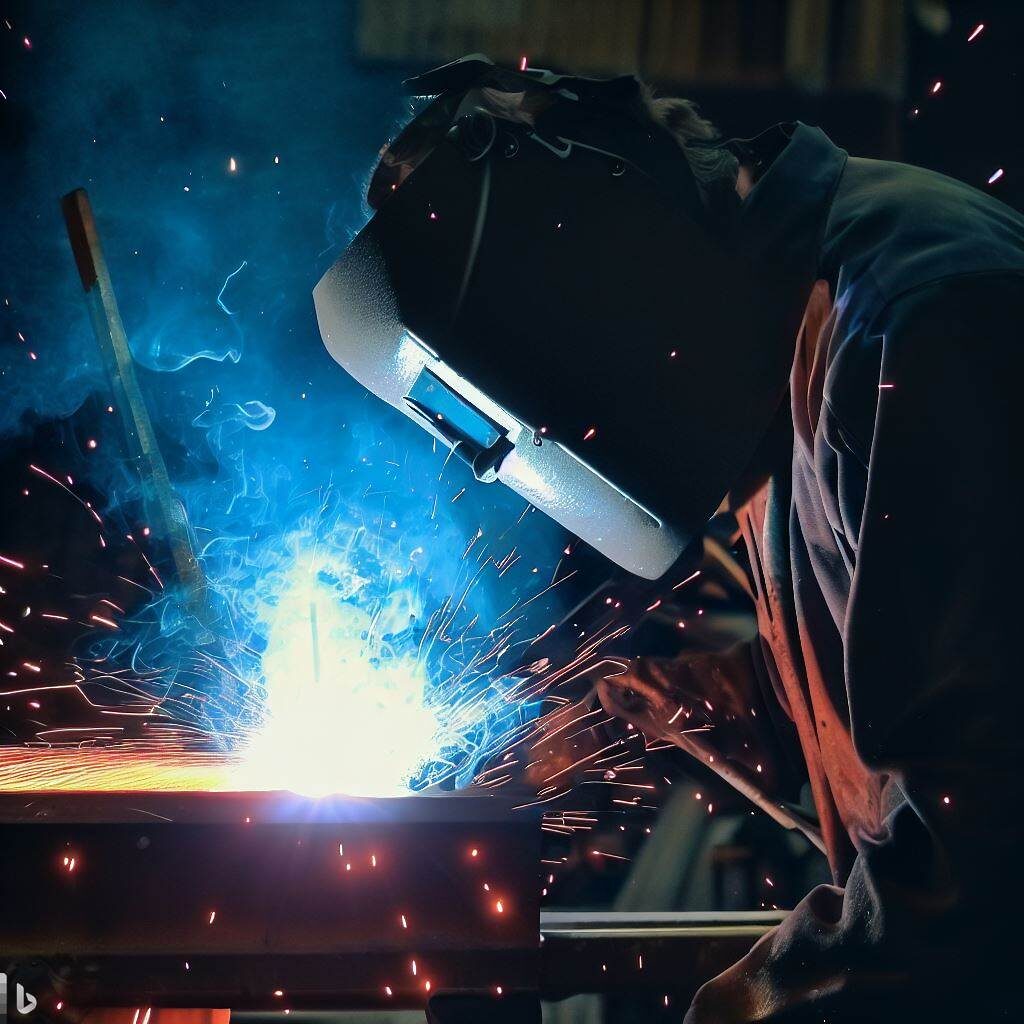
METCO’s Turret Punching Services
What is Turret Punching?
Turret punching is a CNC-controlled process that creates holes and features in sheet metal. A punch presses material into a matching die to produce the required shape. The Turret Punch holds up to 58 tools in a rotating turret.
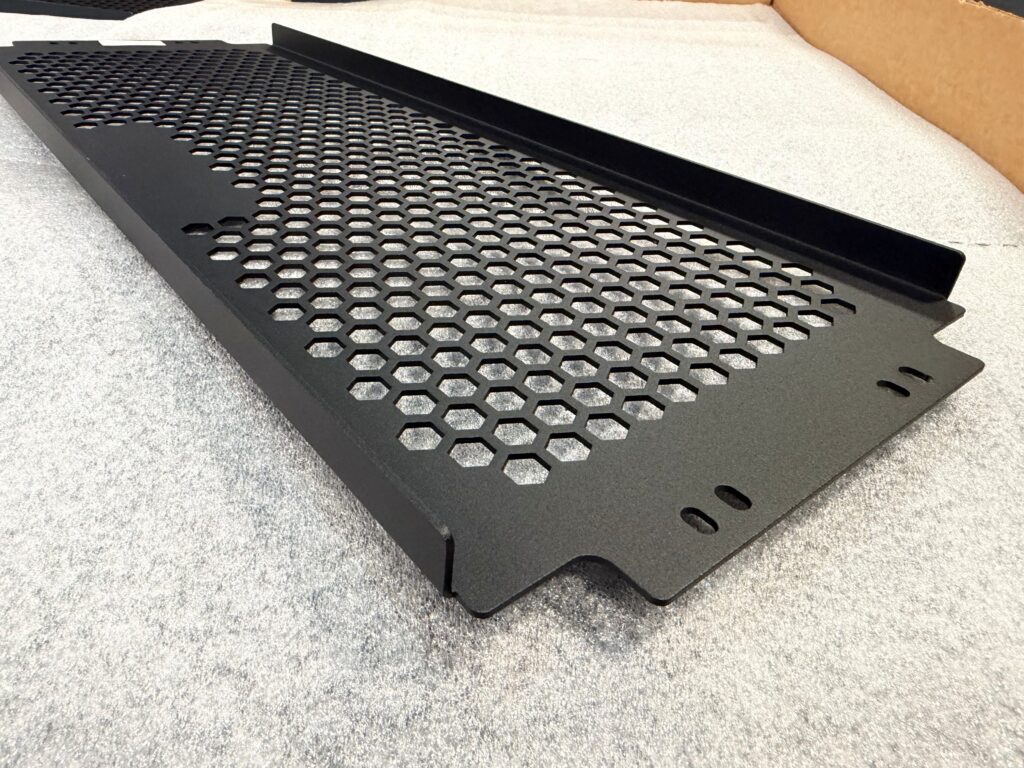
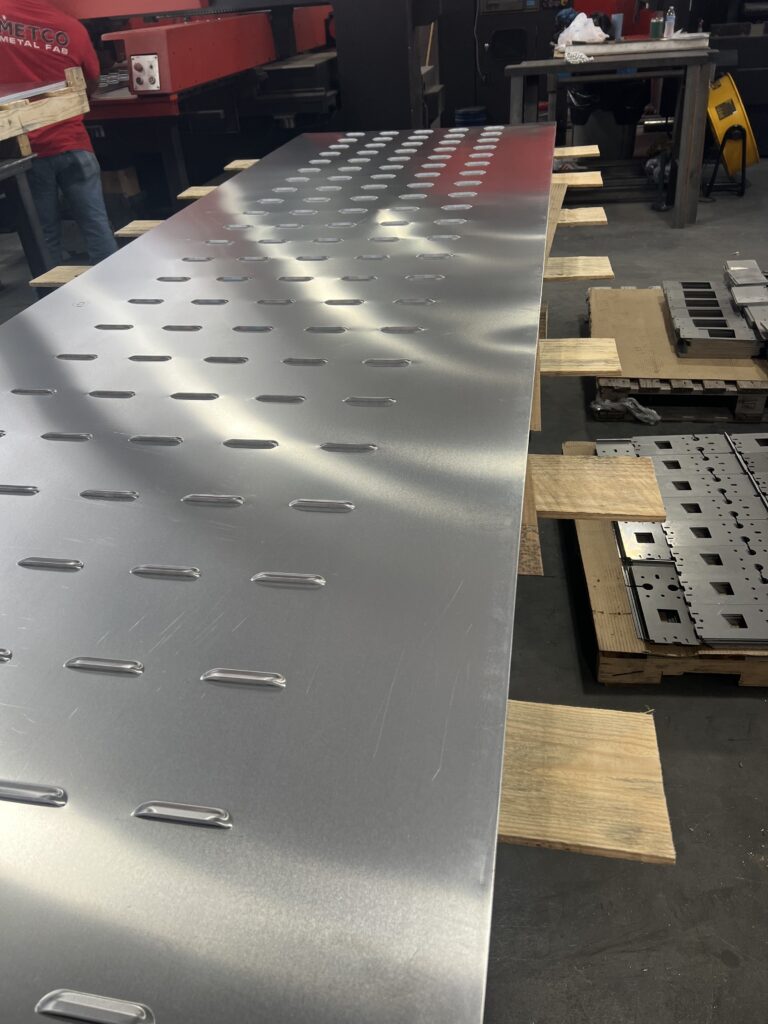
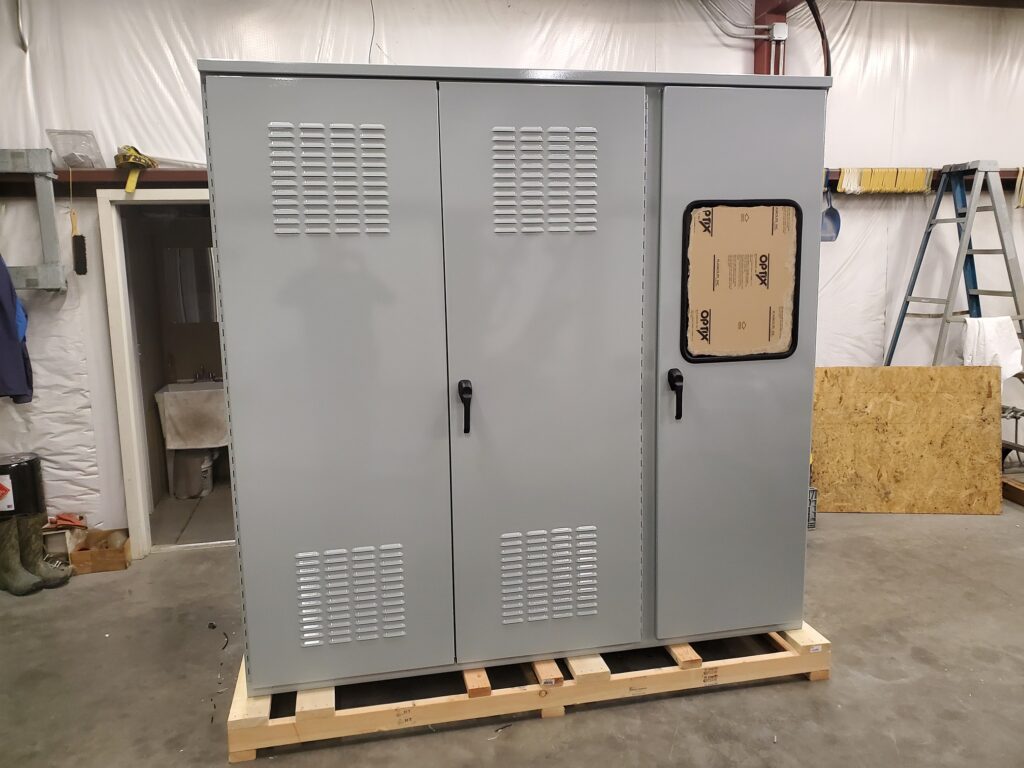
Therefore, it can switch between tooling without manual changeovers. The CNC program positions the sheet and selects the correct tool automatically. As a result, the machine produces holes, slots, notches, and formed features per drawing.
Manufacturers use turret punching to create parts with high hole counts and repetitive features. The process forms louvers, embosses, extrusions, countersinks, and knockouts during production. Consequently, it often eliminates secondary operations and reduces handling time. Turret punching also delivers fast cycle times when designs match standard tooling.
Furthermore, engineers can optimize parts around existing punch shapes to lower manufacturing costs. Therefore, turret punching remains a practical solution for electrical enclosures, industrial equipment, HVAC components, and OEM sheet metal products.
Turret Punch Capabilities
The AMADA PEGA-357 turret punch press combines CNC accuracy with a 58-station turret configuration. The machine automatically indexes tooling to create different features without manual tool changes.
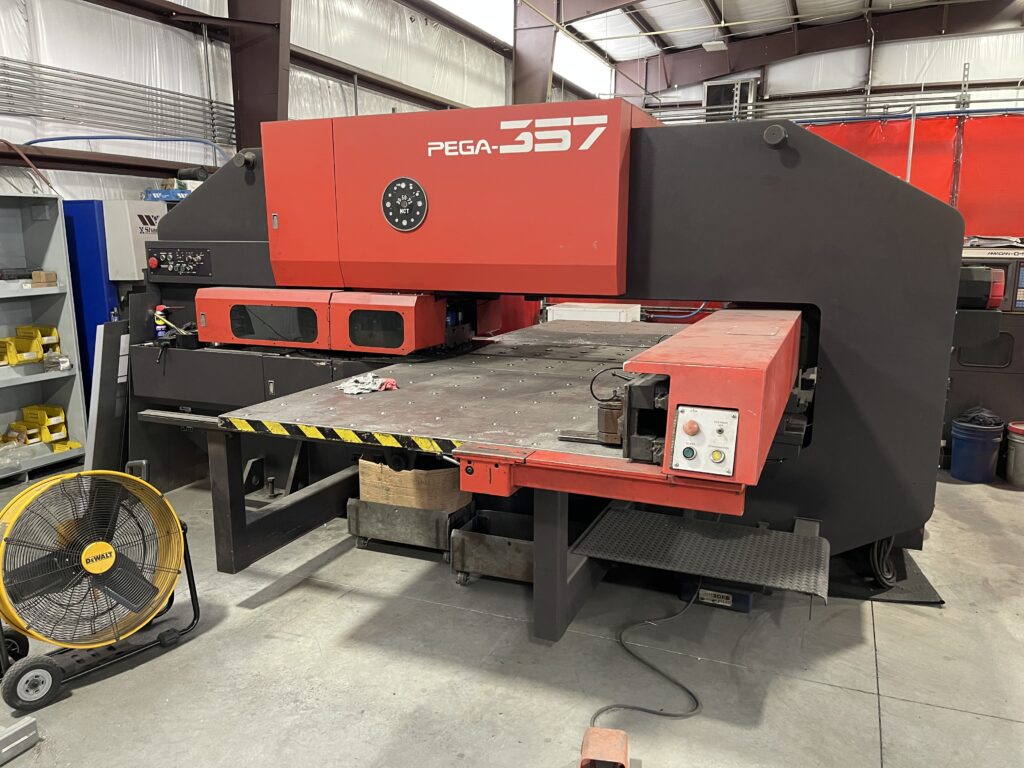
It processes mild steel up to 0.250 inches thick and aluminum up to 0.250 inches thick. In addition, it handles stainless steel within machine and tooling limitations.
The PEGA-357 accepts sheet sizes up to 50 x 72 inches in a single setup. Furthermore, repositioning capabilities allow processing of larger sheets when required.
Typical punching tolerance approaches ±0.004 inches under proper machine conditions. Therefore, manufacturers use the machine for precision sheet metal components with demanding feature requirements.
Engineers often design parts around available tooling to maximize production speed. Therefore, the PEGA-357 remains an effective solution for electrical enclosures, industrial equipment, transportation products, HVAC components, and OEM assemblies.
Turret Punching vs Fiber Laser
Turret punching and laser cutting produce accurate sheet metal parts, but they use different manufacturing methods. The AMADA PEGA-357 turret punch press shears material with mechanical tooling, while METCO’s 15kW AMADA ENSIS-4010 AJ fiber laser removes material with a concentrated laser beam.
Consequently, each process offers distinct advantages. The PEGA-357 excels at high-volume production involving standard holes, slots, louvers, embosses, extrusions, countersinks, and knockouts. A single punch stroke creates many features instantly, which reduces cycle times for repetitive parts.
In contrast, the ENSIS-4010 excels at complex contours, intricate cutouts, and frequently changing designs. Therefore, engineers often select turret punching for production efficiency and laser cutting for geometric flexibility.
The PEGA-357 performs best on sheet metal up to approximately 0.250 inches thick. The machine typically maintains hole location accuracy near ±0.004 inches under proper operating conditions.
Meanwhile, a modern 15kW fiber laser can process significantly thicker materials up to 1″ Mild Steel and up to 3/4″ Stainless Steel while producing complex profiles without tooling restrictions. Laser cutting generally provides tighter contour accuracy on intricate geometries and small internal features. However, the laser cannot create louvers, embosses, extrusions, or countersinks during the cutting cycle. Those features require additional operations after cutting.
Industries served with Turret Punching Services
Turret punching supports a wide range of industries because it combines hole creation and feature forming in one machine cycle. Manufacturers use the process to produce electrical enclosures, control panels, equipment covers, chassis, and mounting brackets efficiently.
In addition, the process creates louvers, embosses, extrusions, countersinks, and knockouts without secondary operations. Electrical equipment manufacturers use turret punching for power distribution cabinets, junction boxes, telecommunications housings, and automation enclosures.
Likewise, HVAC manufacturers rely on turret punching for ventilation assemblies, access covers, equipment panels, and airflow components. Consequently, these industries achieve lower labor costs, faster production rates, and consistent part quality.
Industrial equipment manufacturers use turret punching to produce machine guards, access panels, operator stations, maintenance doors, and protective covers. Material handling companies utilize the process for conveyor components, rack accessories, storage systems, and equipment housings.
Furthermore, transportation manufacturers use turret punching for trailer components, truck body panels, battery boxes, fleet accessories, and structural supports. OEM manufacturers also incorporate turret punched parts into agricultural equipment, industrial automation systems, packaging machinery, fitness equipment, and electronic housings.
Because many of these products require recurring hole patterns and formed features, turret punching often delivers the lowest cost per component.
Why Choose METCO for Turret Punched Parts
OEM buyers choose METCO because the company combines CNC turret punching, fiber laser cutting, press brake forming, welding, and design-for-manufacturing support within a single fabrication workflow.
METCO can produce recurring hole patterns, louvers, embosses, extrusions, and countersinks on its AMADA PEGA-357, then move parts directly into bending, welding, and assembly operations without transferring work between multiple suppliers.
As a result, customers simplify project management, reduce communication delays, and maintain better control over quality and lead times. Furthermore, METCO’s ability to support turret punching, welding, and fiber laser cutting allows engineers to select the most efficient manufacturing method for each part, helping OEMs reduce costs, improve manufacturability, and receive fully fabricated components from one manufacturing partner.