



PEM Installation Services for Sheet Metal Designs
PEM® self-clinching hardware provides engineers with a reliable method for creating permanent internal threads, external mounting points, component spacing, captive panel fasteners, and other high-strength attachment features in thin sheet metal. Therefore, by installing PEM nuts, studs, standoffs, captive hardware, and threaded inserts into properly sized punched or laser-cut holes, manufacturers can eliminate loose hardware, welded nuts, and tapped holes. Furthermore, this method improves assembly efficiency, serviceability, and overall product reliability in enclosures, control panels, electronics, industrial equipment, and fabricated metal assemblies. In fact, METCO Metal Fab offers PEM Installation Services for prototypes and bulk production runs.
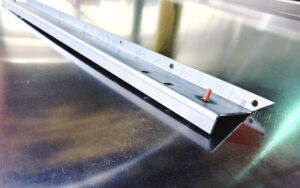
What Is PEM Hardware?
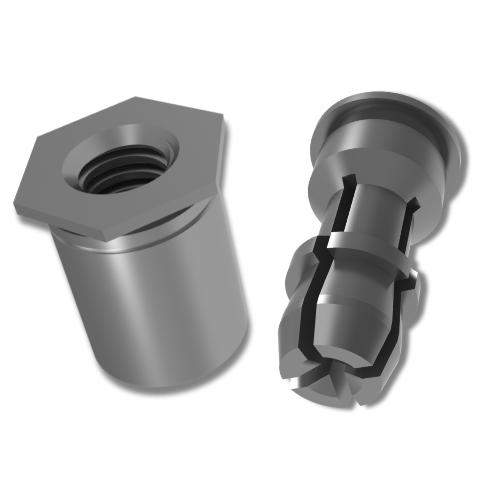
Answer: PEM hardware, often called self-clinching fasteners, creates permanent threads in thin sheet metal by displacing material around a specially designed fastener. Therefore, these fasteners eliminate the need for welded nuts, loose hardware, or tapped holes in thin materials.
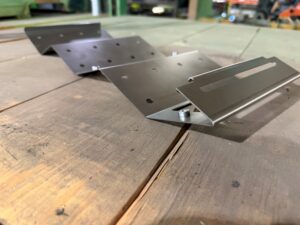
For this reason, engineers commonly include PEM hardware when a design needs:
- Internal or external threads
- External mounting points
- Captive access panel screws
- Permanent hardware in thin sheet metal
- Spacing between components
How it Works
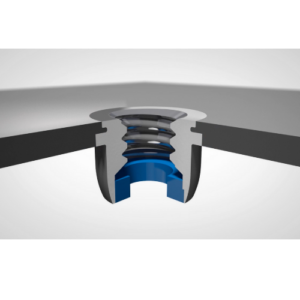
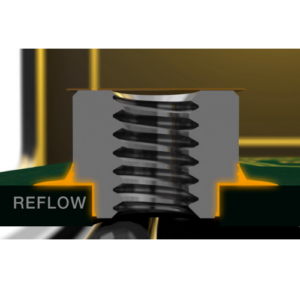
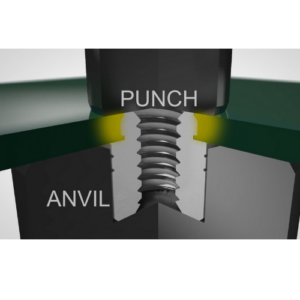
METCO installs PEM® self-clinching hardware by pressing each fastener into a properly sized punched or laser-cut hole. During installation, the ductile sheet metal flows into the fastener’s annular undercut under controlled pressure. This process creates a permanent mechanical interlock that resists both push-out and torque-out forces.
Selection Guide for PEM Hardware Installation Services
Next, choose what you need to help you find the PEM you need:
Does your design need Threads?
Need Internal Threads?
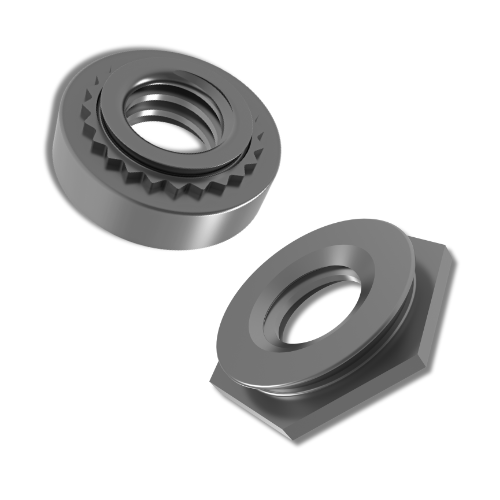
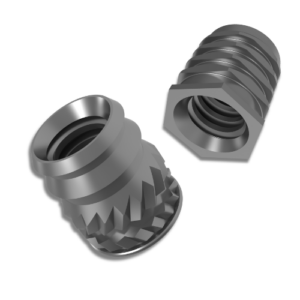
Look for a PEM Nut (CLS, S, SP, or F Series)
Nuts are used when:
- Thin sheet metal cannot be tapped
- A machine screw must be installed into the sheet
- High torque resistance is required
Commonly seen in:
- Electrical enclosures
- Control cabinets
- Equipment covers
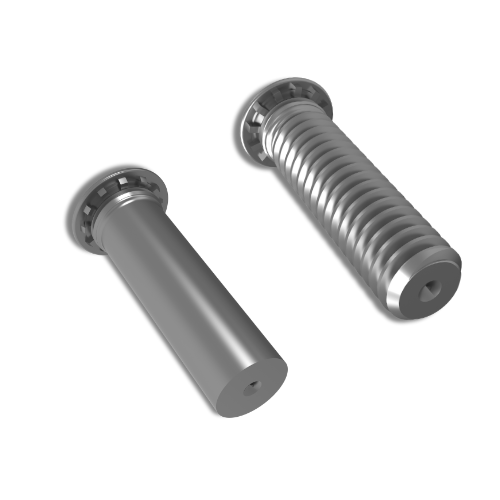
Need External Threads or Mounting Points?
Trying to add Component Clearance or Spacing?
Look for a PEM Standoff (SO, SOS, BSO, BSOS Series)
Engineers often use standoffs when:
- PCBs need elevation from chassis
- Components require fixed separation
- The product needs threaded spacing.
Common uses:
- Electronics assemblies
- Instrument panels
- Control cabinets
Do Screws need to Stay Attached to a removable panel?
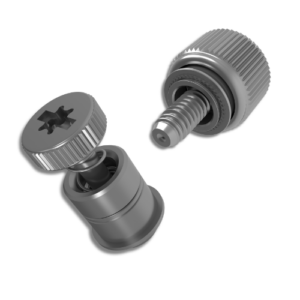
Consider a PEM Captive Hardware (PF11, PF12, or PF13 Series)
Engineers often choose captive hardware when:
- Service Technicians must not loose fasteners during servicing.
- Frequent maintenance occurs
- Tool-controlled access is desired
Design applications:
- Electrical enclosures
- Access panels
- Industrial equipment
Struggling with Alignment Flexibility?
Evaluate a PEM Floating Nut (AS, AC, or LAS Series)
Floating Nuts are a possible mitigation tool when:
- Hole-to-hole misalignment exists
- Manufacturing variation must be tolerated
- Components are difficult to align
Typical float:
- Up to approximately ±0.030″ depending on series
No Access to Back Side?
Check out PEM Blind Fasteners
Blind Fasteners are useful when:
- Only one side of the assembly is accessible
- For example, tubes, formed channels, and closed assemblies are involved
Alternative:
- Consider PEM blind threaded products or rivet nuts depending on design requirements
Dealing with vibrations and long maintenance intervals?
Include PEM Self-Locking Fastener Hardware in your considerations
Self-Locking Hardware works well when:
- For example, equipment experiences vibration
- Importantly, thread loosening is unacceptable
- Long maintenance intervals are required
Examples:
- PEM locknuts
- When properly specified, prevailing torque captive screws
- Additionally, self-locking standoffs
Custom applications
I can’t find what I need and have a unique application
Send your print, STEP file, or sheet metal model for review. Then, METCO will recommend the appropriate fastener family, size, material compatibility, and installation method. In practice, a collaborative design improves project success significantly.
PEM Design Guidelines
| Design Factor | Recommendation |
|---|---|
| Hole Type | Punched preferred, laser acceptable |
| Material Hardness | Sheet must be softer than fastener |
| Minimum Distance to Edge | Per PEM catalog specifications |
| Hole Tolerance | Follow manufacturer specs exactly |
| Installation Force | Use arbor press or hydraulic PEM press |
| Thin Materials | Verify minimum sheet thickness for selected hardware |
| Coated Parts | Ask for PEM Installation Services to be routed before powder coating, whenever possible. |
PEM Hardware FAQ
What sheet metals work with PEM hardware?
PEM hardware works best in ductile sheet metals such as mild steel, aluminum, and stainless steel that are softer than the fastener being installed.
Can PEM hardware be installed in laser-cut holes?
Yes. Properly sized laser-cut holes are acceptable for many PEM fasteners, although punched holes are often preferred for high-volume manufacturing.
Is PEM hardware stronger than welded nuts?
PEM hardware often provides a more consistent attachment solution than welded nuts in thin sheet metal while eliminating welding distortion and secondary finishing requirements.
What is the minimum sheet thickness for PEM hardware?
Minimum thickness depends on the fastener series and size. Designers should follow PEM catalog specifications for each product family.
Technical content reviewed by Antony Sanchez, Manufacturing Specialist, METCO Metal Fab